ALPHA FLOWPreparing your service experience
Air Duct Deodorizing technician and professional work process in Dallas-Fort Worth
Specialty service guide11 min read

Alpha Flow professional field guide

Air Duct Deodorizing
Process & Quality Guide

Air duct deodorizing built around identifying and removing an accessible odor source before considering a compatible treatment. This field guide explains how a careful air duct deodorizing project should be planned, performed and verified, including the details a property owner can use to evaluate quality without becoming a technician.

Air Duct & HVACSpecialtyWork ProcessQuality Checklist
Start with the complete system

Professional air duct deodorizing
is a sequence, not a shortcut.

Fragrance alone can mask smoke, moisture, pest or debris odors temporarily while the underlying condition remains. The correct response begins with context and access, not with a tool selected before the technician sees the property.

We gather odor history, inspect accessible components, remove reachable source material and discuss treatment limits honestly. That method is most useful when the homeowner can see how it connects to accessible duct surfaces, returns, plenums and odor-affected components, the original concern and the documented result.

The service focuses on source control and gives you realistic expectations about what duct treatment can and cannot change. A good guide cannot predict every field condition, but it can show the decision points that separate thoughtful work from a generic sales package.

The professional workflow

Six stages of a controlled
air duct deodorizing project.

Actual access and scope vary by property. The sequence below shows the professional decisions that should remain visible even when the equipment, materials or project duration change.

01
Professional stage 1

Start with the symptom and history

A professional air duct deodorizing visit begins with what changed, when it appears and what work has already been attempted. That context helps the technician distinguish a recurring system issue from a one-time condition before tools are selected.

Quality checkpoint

The technician can explain why air duct deodorizing is the logical starting point and what would fall outside that visit.

02
Professional stage 2

Map access and define the work boundary

The technician reviews the included supply, return and accessible HVAC zones, then identifies the surfaces and components that can be reached without destructive access. The working scope centers on accessible duct surfaces, returns, plenums and odor-affected components; concealed or unrelated components should be named as limitations rather than quietly assumed.

Quality checkpoint

You know which areas are included, which are not accessible and what could require a separate decision.

03
Professional stage 3

Protect the property before work begins

Before material is disturbed, Alpha Flow prepares registers, flooring, furnishings and sensitive mechanical components. Collection, containment and access equipment are positioned first so the service method does not trade a system problem for dust, debris or damage in the occupied space.

Quality checkpoint

Protection is visible and appropriate for the property before odor-history interview begins.

04
Professional stage 4

Perform the air duct deodorizing method

We gather odor history, inspect accessible components, remove reachable source material and discuss treatment limits honestly. The objective is to confirm the condition, choose the least disruptive appropriate method and keep the scope controlled. Tools and materials are adjusted to the accessible construction and observed condition rather than forcing one method onto every property.

Quality checkpoint

Odor-history interview, Source-oriented inspection, Reachable debris removal remain connected to the agreed service boundary.

05
Professional stage 5

Verify the accessible result

The technician reviews the accessible openings, serviced pathways and included equipment areas after the work. The result should be evaluated against the starting condition, not against an unrealistic promise about hidden sections that could not be seen or reached.

Quality checkpoint

The service focuses on source control and gives you realistic expectations about what duct treatment can and cannot change. The team can show what supports that conclusion.

06
Professional stage 6

Explain evidence and practical next steps

The visit concludes with the original condition, the completed accessible work and prevention guidance. A current priority, a routine maintenance note and an optional improvement should be presented as different decisions so the homeowner is never pressured by vague technical language.

Quality checkpoint

You leave with a clear record of the work completed and understand any separate recommendation before approving it.

The work in context

People, tools and
visible proof.

Photos are most useful when they explain a condition or completed area, not when they are shown without context.

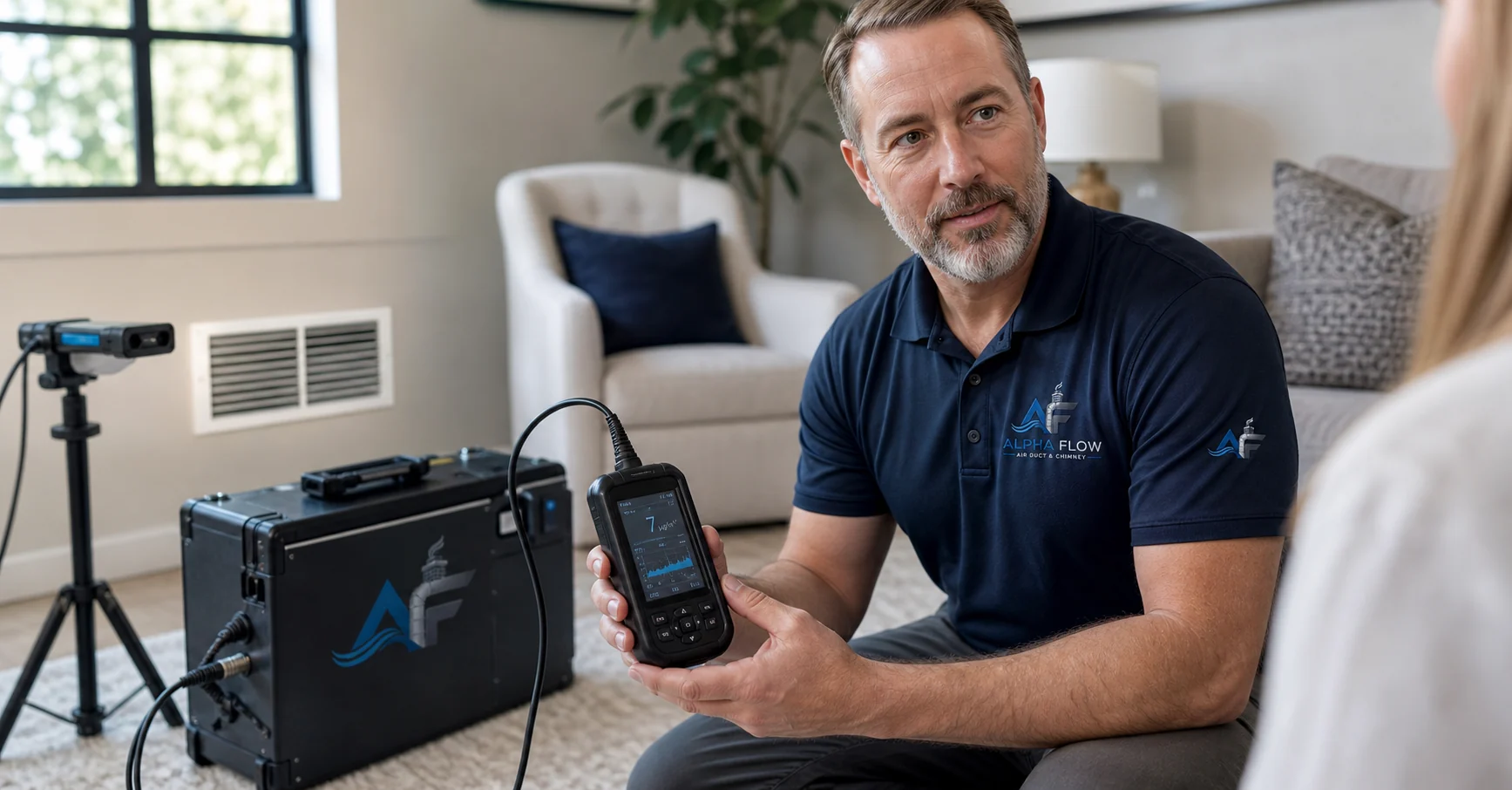
Air Duct Deodorizing field view 1: Alpha Flow technician, equipment and professional air duct & hvac workmanship
01
Assigned technicianA recognizable professional connected to the visit.
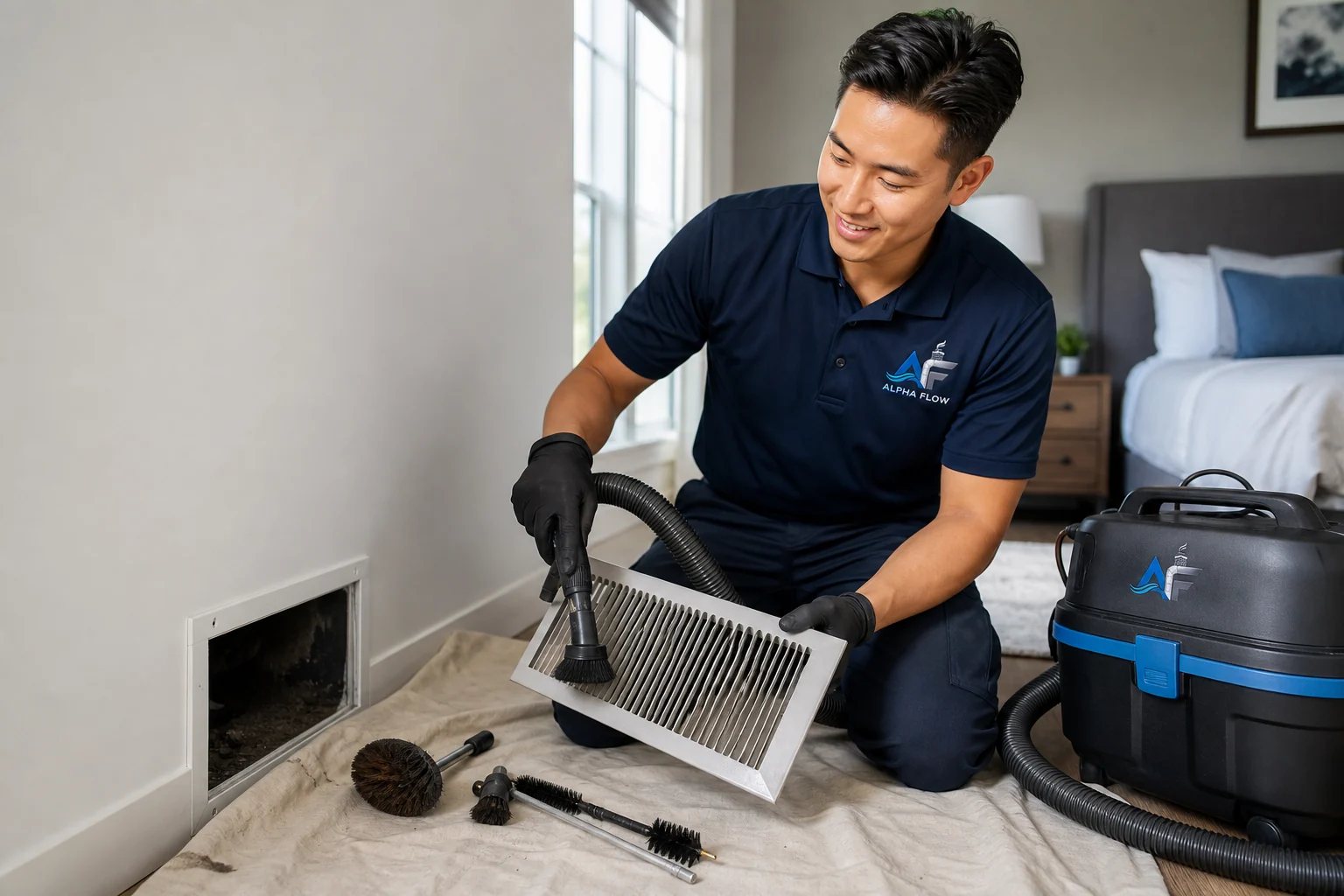
Air Duct Deodorizing field view 2: Alpha Flow technician, equipment and professional air duct & hvac workmanship
02
System-appropriate toolsOdor-history interview
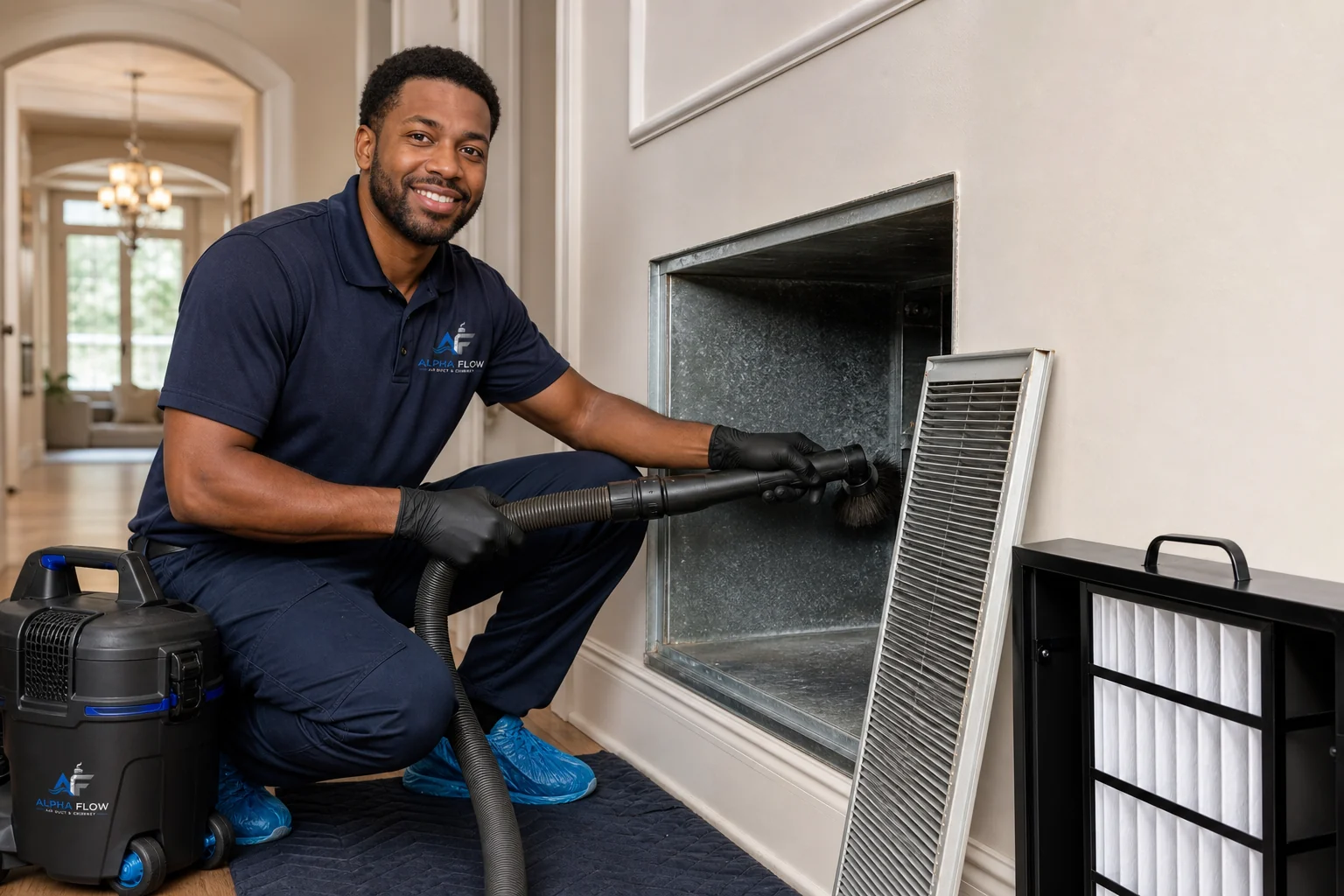
Air Duct Deodorizing field view 3: Alpha Flow technician, equipment and professional air duct & hvac workmanship
03
Documented workmanshipSource-oriented inspection
Homeowner quality checklist

Five signs the work
is being handled professionally.

Use these checkpoints before, during and after the appointment. They keep the conversation centered on evidence and the agreed service boundary.

Explore Air Duct Deodorizing
01

The airflow and HVAC hygiene technician explains access and scope before beginning air duct deodorizing.

02

Odor-history interview is visible in the setup rather than mentioned only after the work.

03

The method is appropriate for accessible duct surfaces, returns, plenums and odor-affected components and changes when material or access conditions require it.

04

Photos or a direct walkthrough connect recommendations to the accessible openings, serviced pathways and included equipment areas.

05

Anything outside the original scope remains a separate, clearly explained choice.

Before the appointment

Prepare the information.
Leave the system to the technician.

You do not need special tools or a technical diagnosis. Ordinary access, a short history and safe property instructions are more valuable.

01

Write down when the air duct deodorizing concern started and whether weather, appliance use, renovation or occupancy changes affect it.

02

Clear ordinary personal items from the primary access point to accessible duct surfaces, returns, plenums and odor-affected components; do not dismantle or climb to reach the system yourself.

03

Secure pets and share parking, gate, roof-access or building-management instructions before the appointment.

04

Save any useful photos, prior invoices or inspection notes so the technician can compare the history with the current condition.

Do not create access by taking a risk.

Do not climb onto a roof, reach into a moving appliance, open energized HVAC equipment or use a fireplace when you suspect an immediate fire, gas, carbon-monoxide or electrical hazard. Leave the area when appropriate and contact emergency services or the relevant utility.

What to watch for

Common shortcuts
that weaken the result.

Fast work is not automatically poor work. The warning sign is a step being skipped without a clear reason or the homeowner being asked to approve work without useful evidence.

01

Skipping the condition review

Starting air duct deodorizing immediately can hide route, material or access limitations that should shape the method.

02

One tool for every system

Construction varies. A method that is effective on one part of accessible duct surfaces, returns, plenums and odor-affected components can be ineffective or damaging on another.

03

No containment plan

Professional work controls dust, soot, lint, residue or repair material before it is disturbed near occupied areas.

04

A recommendation without evidence

Using a broad treatment or forceful method before the source, material and access limits are understood.

Questions worth asking

A professional should be able
to answer these clearly.

  1. 01

    Which parts of accessible duct surfaces, returns, plenums and odor-affected components are included and accessible today?

  2. 02

    What condition made you choose this air duct deodorizing method?

  3. 03

    How will registers, flooring, furnishings and sensitive mechanical components be protected during the work?

  4. 04

    What photos or measurements will show the starting and completed condition?

  5. 05

    If you discover another issue, will that remain a separate estimate and decision?

Professional guide FAQ

Air Duct Deodorizing
questions, answered.

Use these answers as a planning reference. The address, construction, access and observed condition still determine the final scope.

Still have a question? Call 469-890-1608
What should happen before professional air duct deodorizing begins?+

The technician should first review the symptom, system history, access and the boundary of the visit. For air duct deodorizing, the primary focus is accessible duct surfaces, returns, plenums and odor-affected components. Nearby surfaces should be protected and any inaccessible section should be identified before work starts.

What does a quality air duct deodorizing process include?+

The process should include odor-history interview, source-oriented inspection, reachable debris removal, transparent treatment options. The method must respond to the construction and accessible condition, and the final explanation should connect photos or direct observations to the work completed.

How can I prepare for a air duct deodorizing appointment?+

Write down when the air duct deodorizing concern started and whether weather, appliance use, renovation or occupancy changes affect it. Clear ordinary personal items from the primary access point to accessible duct surfaces, returns, plenums and odor-affected components; do not dismantle or climb to reach the system yourself. Secure pets and share parking, gate, roof-access or building-management instructions before the appointment. Save any useful photos, prior invoices or inspection notes so the technician can compare the history with the current condition. You should never climb, open energized equipment or dismantle the system to prepare for a routine visit.

How long should air duct deodorizing take?+

Timing depends on access, system size, route length, buildup, material condition and whether the property is residential, multifamily or commercial. A professional team should explain the expected service window after confirming the address and scope rather than promising one universal duration.

What documentation should I receive after air duct deodorizing?+

When access and site conditions allow, the closeout should show the relevant starting condition, accessible completed work and any limitation or separate recommendation. The service focuses on source control and gives you realistic expectations about what duct treatment can and cannot change.

When should additional work be a separate decision?+

A repair, treatment, replacement, destructive access or newly discovered system area that was not included in the original boundary should be explained and approved separately. Evidence should support the recommendation before a homeowner is asked to expand the scope.
Alpha Flow professional ready to discuss air duct deodorizing
Turn the guide into a clear next step

Talk through the property.
Then choose the right visit.

Share what you are seeing, the ZIP code and the service you are considering. Alpha Flow can help confirm whether air duct deodorizing is the sensible starting point.

Call 469-890-1608
Direct request to our team

Ask about Air Duct Deodorizing

Complete the short form and send your request directly to the Alpha Flow scheduling team.

or
Call 469-890-1608